
At the beginning of a goal, the next step can feel obvious. You have energy, a clear reason to begin, and a picture of what progress might look like. A few weeks later, ordinary responsibilities compete for attention, and the same action takes more effort to start.
That change is useful information. It invites you to look at the structure around the goal: what you have committed to, when it fits, what gets in the way, and how you respond when you miss a step.
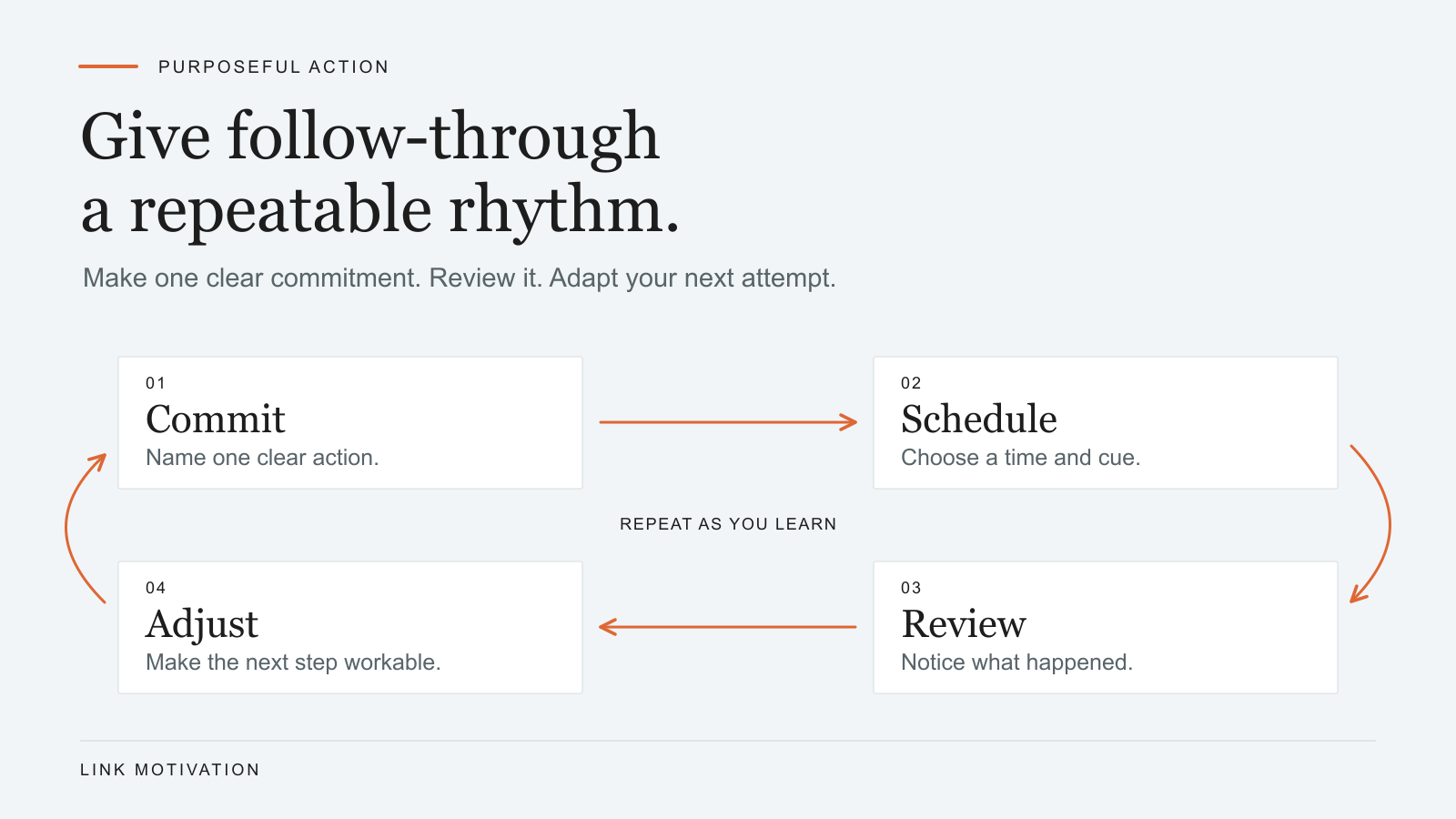
Accountability can give you a practical way to keep returning to work that matters. It works best when the commitment is clear enough to review and realistic enough to attempt in your actual life.
Make the commitment smaller than the ambition
An ambition gives you direction. A commitment describes the action you will take next. “Build a stronger professional presence” may matter deeply to you, but it does not tell you what to do on Thursday afternoon.
A concrete commitment might be spending twenty minutes revising one section of your professional profile. Another might be reaching out to one former colleague with a thoughtful message. Each gives you an action you can finish and review.
Before setting the commitment, ask whether the goal still matters. Sometimes a stalled plan needs a better structure. Sometimes your priorities have changed. Accountability should help you notice that difference, rather than keep you attached to a goal simply because you once announced it.
1. Define what you will count as progress
Choose an action you can influence directly. You can prepare an application, practice a presentation, or ask for feedback. You cannot guarantee an offer, an enthusiastic audience, or another person’s response.
Write your commitment in one sentence: “By Friday, I will draft the opening section of my proposal and send it to my review partner.” Include the action, a reasonable scope, and a date.
Define completion before you begin. A draft may be ready for feedback while still needing work. If you quietly change “write a first draft” into “produce a flawless final version,” you create a moving target that makes progress difficult to recognize.
2. Give the action a place in your week
Look at your actual schedule before choosing a time. Consider existing responsibilities and the kind of attention the task requires. A demanding writing session may need a different setting from a brief follow-up message.
Decide when you will begin, where you will work, and what needs to be ready. Preparing the document, identifying the first question, or gathering the relevant materials can make the scheduled session easier to start.
Also choose a smaller version for a difficult week. If your usual commitment is forty minutes of focused work, the smaller version might be ten minutes spent outlining the next section. Make that version useful enough to preserve direction, and clear enough that it does not become an undefined promise to try.
3. Invite support with a specific agreement
If another person will help you stay accountable, agree on the arrangement together. Ask whether they are willing and what level of contact is practical for them. Friendship, a shared workplace, or enthusiasm for your goal does not automatically create an obligation.
A simple agreement can answer four questions:
- What commitment will you report on?
- When and how will you check in?
- Would you like questions, encouragement, or help thinking through obstacles?
- When will you review whether the arrangement is useful?
For example, you might exchange a short Friday update for four weeks. Each person shares what they completed, what interrupted the plan, and what they will do next. Keep the arrangement light enough that supporting the goal does not become a second project.
4. Review the evidence without turning it into a verdict
At your check-in, begin with what happened. Did you complete the action? Part of it? None of it? Describe the result accurately before explaining it.
Then investigate the conditions. Perhaps you underestimated the task, scheduled it during an unreliable part of the day, or needed information you had not requested. Perhaps you avoided starting because the next step was unclear. Different obstacles call for different adjustments.
“I am bad at following through” gives you little to change. “I planned to write after three evening commitments and never opened the document” points toward a scheduling decision. Accountability becomes useful when the review leads to an adjustment you can test.
5. Use a reset you can repeat
When you miss a commitment, decide on the next action before adding more work to compensate. Doubling the following week’s target may create a plan that is harder to keep than the original.
Try a short reset: name what happened, choose one change, and set the next reasonable commitment. You might move the session, reduce its scope, ask for missing information, or reconsider whether the goal deserves space this month.
After several check-ins, look for patterns. Repeated interruptions may mean the plan needs a larger adjustment. Consistent completion may suggest you are ready to expand it slightly. Let the evidence guide the size of the next commitment.
Build a plan you can return to
Start with one action, one scheduled time, and one review. If you want a longer planning structure, explore this 30-day action plan.
For support connecting your goals with practical follow-through, explore Purposeful Action coaching at Link Motivation or request a free 30-minute Clarity Call with Dr. Kimble. Appointment requests are subject to approval.
Keep exploring
Continue with What to Expect From Your First Life Coaching Session, or browse all Link Motivation insights.