

You can attend an event, collect names, and leave without feeling more connected. You can also have one thoughtful conversation that gives you a clearer perspective or a reason to stay in touch. The difference often comes from the attention you bring and what happens afterward.
Meaningful professional connections grow through an exchange that matters to both people. That might involve learning from each other, sharing useful information, or understanding how your work overlaps. You do not need a large audience or a polished networking persona to begin.
You do need a purpose that goes beyond gathering contacts. Start by deciding what kind of connection would be useful and what you can contribute without overpromising.
Begin with a reason to connect
“I should network more” creates activity without much direction. A more useful intention could be learning how others approach a challenge, finding peers at a similar stage, or staying connected with colleagues whose judgment you respect.
Choose one intention for the next month. Then identify where relevant conversations already happen. You might begin with a former colleague, a professional group you belong to, or someone whose work has prompted a specific question.
Existing relationships deserve attention too. Someone does not need to be new, influential, or connected to an immediate opportunity to be worth knowing. A thoughtful follow-up with a familiar person may be your most natural starting point.
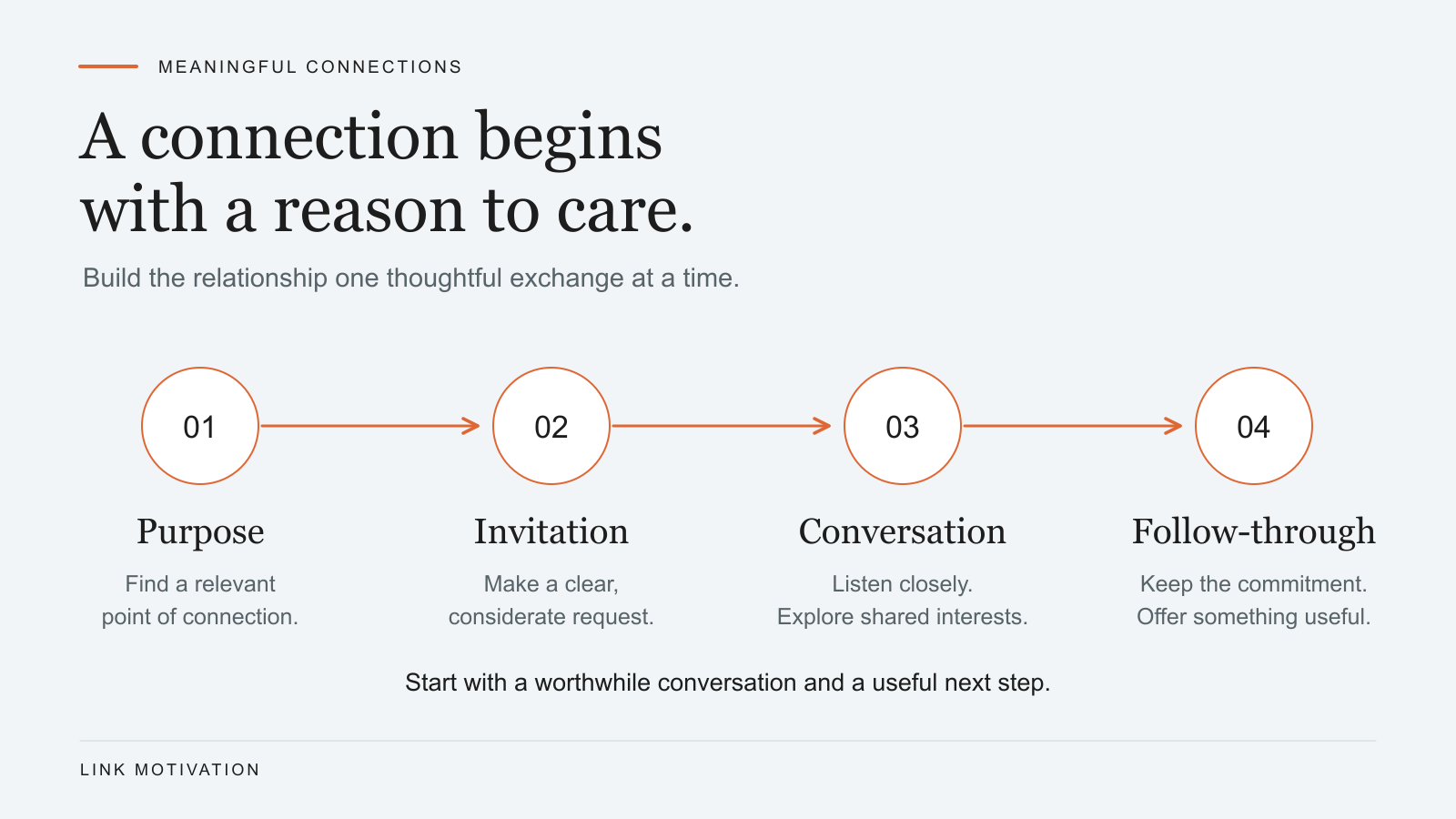
1. Notice something specific
Before reaching out, identify what genuinely interests you about the person’s work or perspective. This gives your message a clear purpose and helps the other person decide whether they want to respond.
Specificity does not require extensive research. It might be a point they raised in a meeting, a project they described publicly, or a shared experience you remember. Keep your attention on information they have chosen to share in the relevant professional setting.
For example: “Your point about making team handoffs clearer stayed with me. I’m working on a similar challenge and would be interested in how you decided what to document.” That gives the conversation somewhere to begin.
2. Make a small, clear invitation
A vague request to “pick your brain” asks the recipient to figure out the topic and the size of the commitment. A focused invitation makes both easier to understand.
Name the topic, explain why you are asking them, and suggest a manageable format. You could ask one question in a message or invite a short conversation. Leave room for them to decline or suggest another way to connect.
A simple invitation might read: “Would you be open to a brief conversation about how you moved into project leadership? I’m exploring that direction and would appreciate hearing what surprised you. If your schedule is full, I understand.”
Use wording that sounds like you. The goal is a considerate invitation, not a script designed to produce a particular response.
3. Give the conversation your attention
Prepare two or three questions, then let the answers influence what you ask next. If you are concentrating on how to describe yourself, you may miss the part of the conversation that deserves more attention.
- What are you working on that you find especially interesting?
- What has changed your approach to that work?
- What do people often misunderstand about the challenge?
Share your own experience when it adds something useful. Keep enough space for a real exchange. You do not need to turn every answer into a lesson or immediately identify a way to help.
Respect the time you agreed on. Near the end, mention one thing you appreciated or learned. If there is a natural next step, discuss it together instead of assuming that one conversation establishes an ongoing commitment.
4. Follow through on the details that matter
A useful follow-up connects directly to the conversation. Thank the person, mention a specific takeaway, and deliver anything you offered. If you promised a resource, check that it is relevant before sending it.
For example: “Thank you for explaining how you approach cross-team projects. Your suggestion to agree on the handoff before work begins gave me something concrete to try. Here is the public workshop resource I mentioned.”
Keep your promises modest enough to keep. Offering three introductions and a detailed review may sound generous, but an unfinished offer adds little value. Ask for permission from everyone involved before making an introduction that shares their contact information.
5. Stay in touch with a reason
Regular contact does not have to mean frequent messages. Reach out when you have a relevant update, a thoughtful question, or something that connects with an interest the person expressed.
You might share what happened after trying their suggestion. You might acknowledge a milestone they announced or invite them to a relevant gathering. Avoid making every message a request, and allow the relationship to develop at a pace that works for both of you.
If someone does not respond, give them space. An unanswered message does not establish why they are unavailable. You can keep building other connections without turning one person’s response into a judgment about your professional worth.
Choose one connection to strengthen this week
Write down one person, one honest reason to contact them, and one small action. Afterward, reflect on whether the exchange felt relevant and respectful, what you learned, and what follow-through you owe.
If you want support approaching professional relationships with greater intention, explore Meaningful Connections coaching at Link Motivation or request a free 30-minute Clarity Call with Dr. Kimble. Appointment requests are subject to approval.
Keep exploring
Continue with How to Prepare for a Difficult Conversation, or browse all Link Motivation insights.