
A career or life transition can unsettle more than your schedule. A familiar role, relationship or routine may have helped you understand where you belonged and what came next. When that changes, even ordinary decisions can feel heavier.
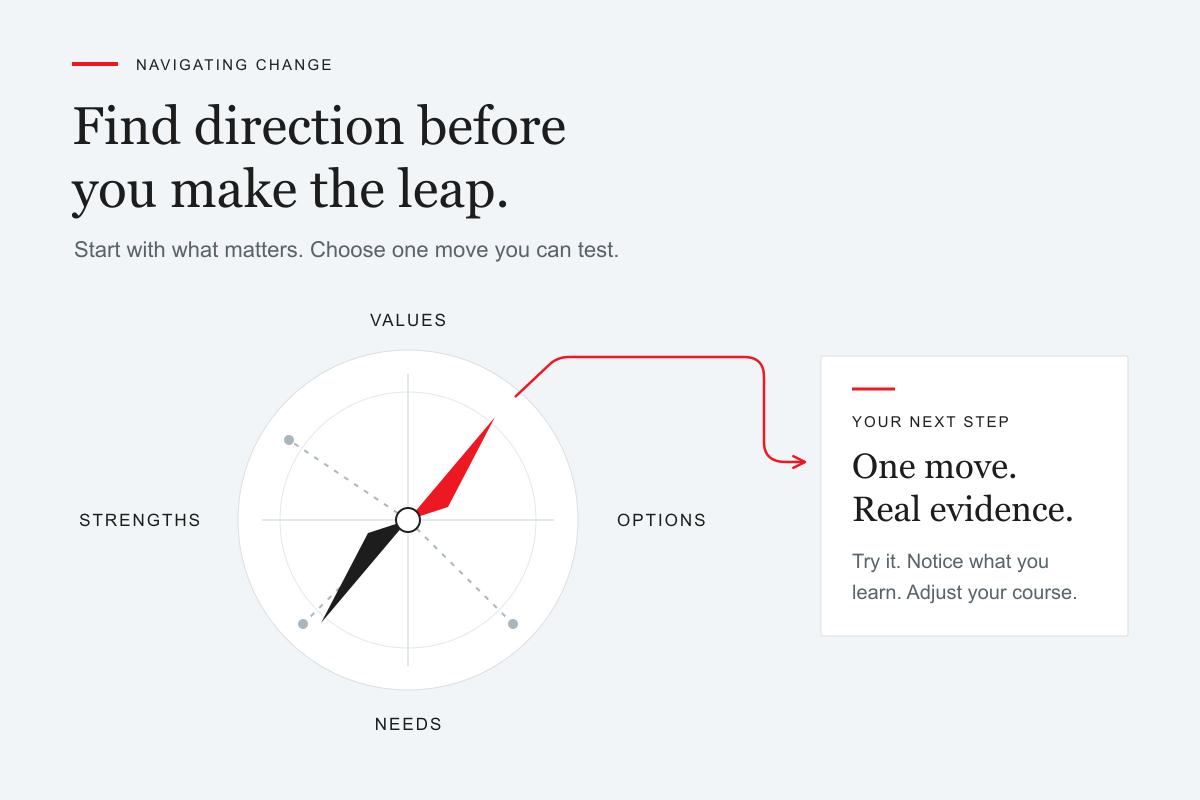
You do not need a complete plan to begin finding clarity. Start by understanding what is happening, what matters to you now and which next step would give you useful information. Clarity often develops through thoughtful action, followed by reflection.
Separate the facts from the story
During uncertainty, it is easy to treat a prediction as a fact. “My role is ending” describes something you know. “I will never find work that fits me” describes a possible future you cannot yet know. Both may feel equally real, but they require different responses.
Write down what you know, then list what you are assuming. Include practical details such as dates, responsibilities and available resources. For each assumption, ask what evidence supports it and what information is missing. You may still have concerns. The goal is to make them specific enough to investigate.
Notice which values need more room
A transition can reveal a mismatch between the life you have been maintaining and the life you want to build. Consider what you want more of in your next chapter: stability, learning, contribution, flexibility, connection or something else.
Choose two or three values and describe what each would look like in everyday life. “Flexibility” might mean being available for a family commitment. “Growth” might mean working with people who challenge your thinking. Concrete descriptions make values useful when you compare options.
Choose priorities for this season
Values guide you over time. Priorities help you decide where to place your attention now. Your immediate priority may be protecting income, completing a qualification, creating a workable routine or making space to consider a change.
Identify one priority that needs attention in the next month and one that can wait. This is a temporary decision, not a permanent statement about your ambitions. If everything stays equally urgent, it becomes difficult to give any one thing enough attention.
Give yourself more than two options
A difficult decision can shrink into a choice between staying exactly where you are and changing everything at once. Look for a third option. You might explore a different responsibility, have an informational conversation, test a new routine or research a possibility before committing to it.
Compare options against your values, current responsibilities and available resources. Notice the tradeoffs. An option may offer more learning while requiring more time, or greater stability with less flexibility. Naming those tradeoffs helps you choose with your circumstances in view.
A 20-minute clarity exercise
Set aside a quiet moment with one page of paper. Keep your answers brief enough that you can see the whole picture at once.
- Five minutes: name the situation. Write one sentence describing the transition. Under it, create two lists: facts you know and assumptions you need to check.
- Four minutes: identify what matters. Choose your two most relevant values. Describe one everyday sign that each value is being respected.
- Four minutes: set a near-term priority. Name what deserves attention this month. List any commitments or limits your next step must respect.
- Four minutes: create three options. Include one modest experiment that does not require a major commitment. Note what you could learn from each option.
- Three minutes: choose an action. Select one step, decide when you will take it and schedule a brief review afterward.
If you cannot choose an option yet, make gathering information your next action. A conversation, a realistic budget or a clearer understanding of a requirement can be valuable progress.
Reflect, then adjust
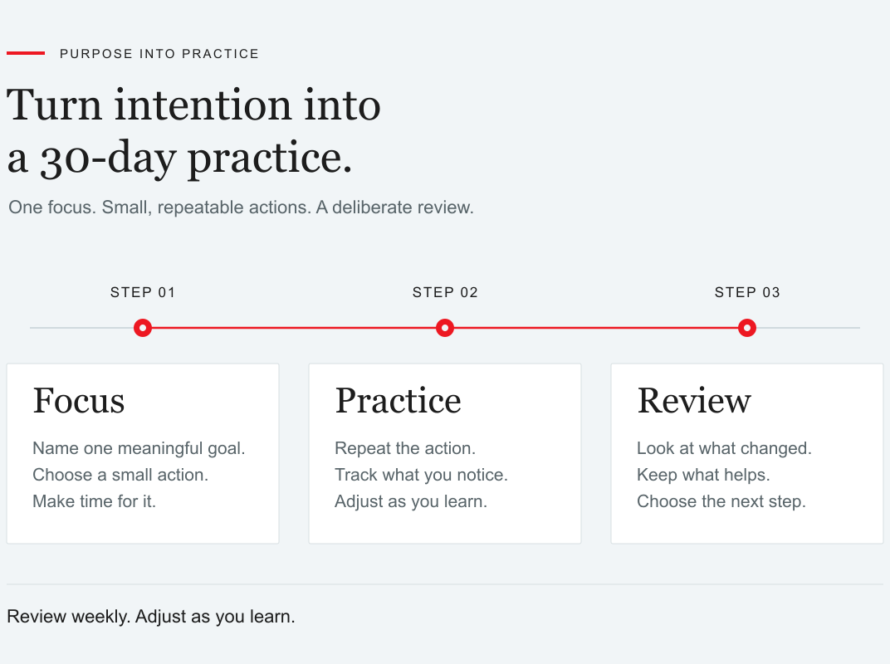
After taking your step, ask yourself: What did I learn? What felt consistent with my values? What needs to change? You are allowed to revise your direction as you learn more.
For a short reflection today, complete this sentence: “The next chapter does not need to be fully clear, but this week I can…” Choose an action small enough to take and meaningful enough to learn from.
If you would like a thoughtful partner in that process, explore Clarity & Direction coaching or request a free 30-minute Clarity Call. We can begin with the transition in front of you and the next step you want to understand.