
You hand over an assignment, then discover that the result is different from what you expected. Perhaps you respond by checking every detail. Or you take the work back because explaining it again seems slower than finishing it yourself. Before deciding that delegation has failed, examine what was actually agreed.
A task description can leave important questions unanswered: what a useful result looks like, which decisions the person can make, and when you need to hear about a problem. The following framework helps you make those expectations explicit while leaving room for another person to do the work in their own way.
1. Describe the outcome and why it matters
Start with the result, not a long account of how you would perform every step. Who will use the work? What decision or action should it support? What needs to be included for it to be ready?
Make the definition of completion observable. “Improve the report” leaves room for several interpretations. A more specific agreement might be: “Prepare a two-page summary of the three service delays, their current owners, and the decisions needed at Friday’s meeting.” That is a hypothetical example, but the distinction applies to many assignments.
Separate essential requirements from preferences. If a particular format serves a real purpose, explain it. If you simply prefer your own layout, consider whether the other person can choose one. Share a useful example when available, while making clear which features matter.
2. Agree on ownership and decision authority
Being responsible for an outcome is difficult when every small decision still needs your permission. Name the choices the person can make independently and the choices that require discussion. Avoid leaving them to discover those boundaries through correction afterward.
You might agree that they can select a working format and coordinate internal interviews, but must consult you before changing a customer commitment. The actual boundaries should fit their role, experience, and the work involved.
Also identify who contributes and who makes the final decision. If several people are involved, choose one owner for coordinating the assignment. Ask that person to explain the agreement in their own words, and invite them to point out missing information. Treat this as a check on shared understanding, not a memory test.
3. Check capacity, access, and support
Ask what the assignment requires and what is already on the person’s schedule. Discuss competing commitments rather than interpreting an immediate yes as evidence that the workload is manageable. If the deadline is fixed, decide what can change about scope, support, or other priorities.
Confirm access to the people, information, and tools needed. A missing introduction or an unavailable file can stop progress even when the instructions are clear. Agree on how you will help remove an obstacle without quietly becoming the person doing the assignment.
Match the support to the situation. Someone trying a new kind of work may need an early example or a shorter first checkpoint. Someone experienced may need only an agreed outcome and a way to raise exceptions. Discuss the level of support instead of assuming that everyone needs the same oversight.
4. Set checkpoints and escalation triggers
A checkpoint should help a decision happen while there is still time to act. Choose it around a meaningful stage, such as an initial outline, the first completed example, or the point before an external commitment. Explain what you want to review and what the person should bring.
Then identify situations that need earlier contact. Examples might include discovering that a deadline is no longer achievable, receiving conflicting instructions, or needing a decision outside the agreed authority. Ask for the issue, its likely effect, and any options already considered. A person should be able to raise a concern before having a complete solution.
Between checkpoints, respect the agreed ownership. If you need an extra update because circumstances changed, explain why. Unannounced checks can turn an otherwise clear arrangement into uncertainty about how much independence the person actually has.
5. Review the result against the agreement
At completion, return to the outcome and requirements you established. Discuss what worked, what needs revision, and what you both learned. Distinguish a missed requirement from a preference you never communicated.
If the result falls short, identify the gap precisely. Was the goal unclear? Was information missing? Did the person need a skill they had not yet developed? Was a commitment not met? These possibilities call for different responses. Accountability means addressing the actual gap and agreeing on the next action, not making a broad judgment about the person.
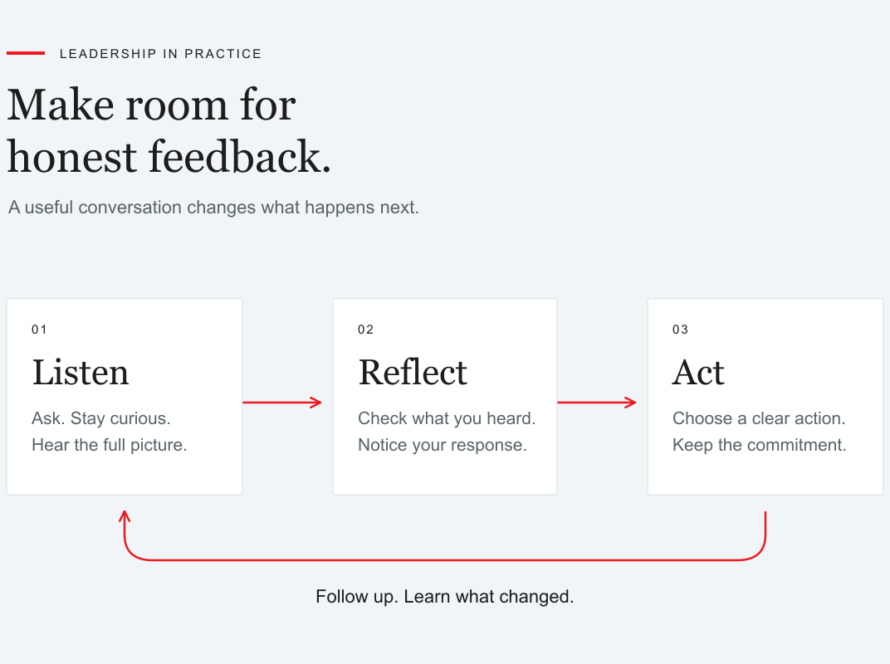
Recognize the work that was done well. Then change one part of the next handoff if needed. For help making concerns easier to raise during an assignment, explore practical habits for honest team conversations.
Your next delegation conversation
Choose one real assignment and prepare a short agreement:
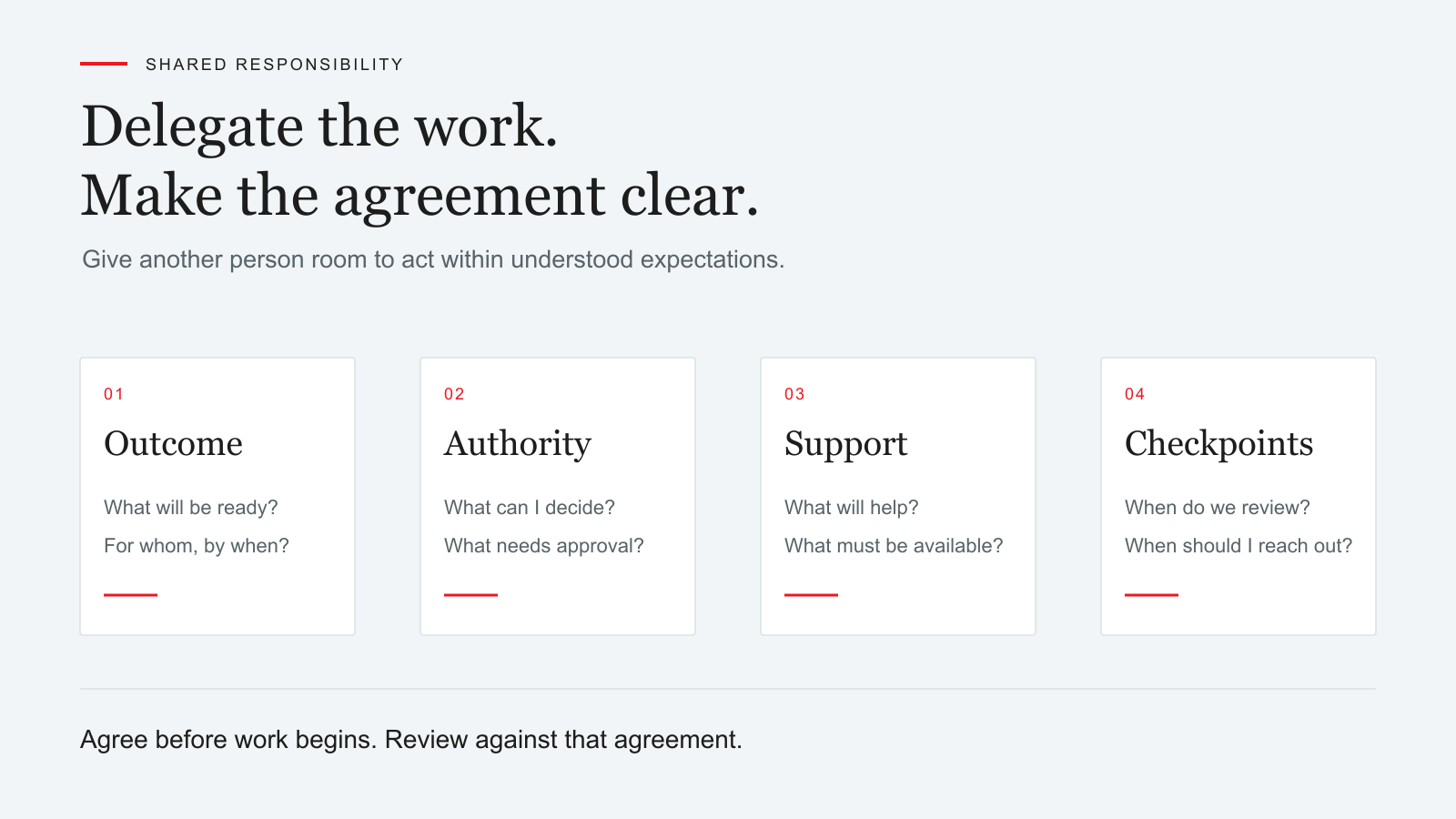
- Outcome: What will be ready, for whom, and by when?
- Authority: What can the owner decide without checking?
- Support: What capacity, access, or guidance is needed?
- Checkpoints: When will you review progress, and what triggers earlier contact?
Write the agreement together where practical. Keep it short enough to use, and revise it openly when circumstances change.
Develop your approach to shared responsibility
Leadership & Growth coaching can help you reflect on how you set expectations, support others, and follow through. To explore a situation you are facing, request a free 30-minute Clarity Call. Requests are reviewed before confirmation.
Keep exploring
Continue with How to Build Meaningful Professional Connections, or browse all Link Motivation insights.