
You want people to tell you when a deadline is slipping, a decision is creating problems, or your own approach is getting in the way. Yet asking for honesty is only a starting point. The more useful question is whether your everyday responses make a difficult conversation easier to have.
You do not have to agree with every concern or act on every suggestion. You can listen carefully, explain your decisions, and make room for information that challenges your view. These five steps offer a practical place to begin.
1. Ask a question people can answer honestly
A broad request for feedback can be difficult to answer, especially when it comes from the person making decisions. Give the conversation a clear focus. Choose a recent meeting, decision, or working arrangement, then ask about its effect.
You might ask which part of a plan is hardest to carry out, what you are missing about a deadline, or where your instructions have created confusion. Keep the first question small enough to discuss. Ask one question at a time, leave room for the answer, and resist filling every pause. Your task is to understand the person’s experience before deciding what it means.
2. Notice your first response to unwelcome news
When someone raises a concern, pause before explaining your intentions or defending the plan. If a decision is urgent, separate the immediate action needed from the fuller conversation you will have afterward.
Thank the person for bringing the issue forward, then ask what they have observed and what needs attention first. You can acknowledge a concern without accepting every interpretation. If you feel defensive, take a moment rather than turning that reaction into a verdict. Later, examine whether your tone, interruptions, or quick conclusions made the conversation harder. This is a leadership habit you can practice in ordinary meetings.
3. Explore the issue before asking for a solution
It is reasonable to encourage initiative. Still, someone may see an important problem before knowing how to solve it. Make room for that early signal.
Work together to distinguish what happened, what the person thinks it means, and what remains uncertain. Ask who is affected and which assumptions need checking. Then invite possible next steps. If the issue concerns your own behavior, avoid making the person responsible for designing your entire improvement plan. Listen for one concrete adjustment you can make. Where an established reporting process is appropriate, explain how to use it without promising confidentiality or outcomes you cannot control.
4. Make your follow-through visible
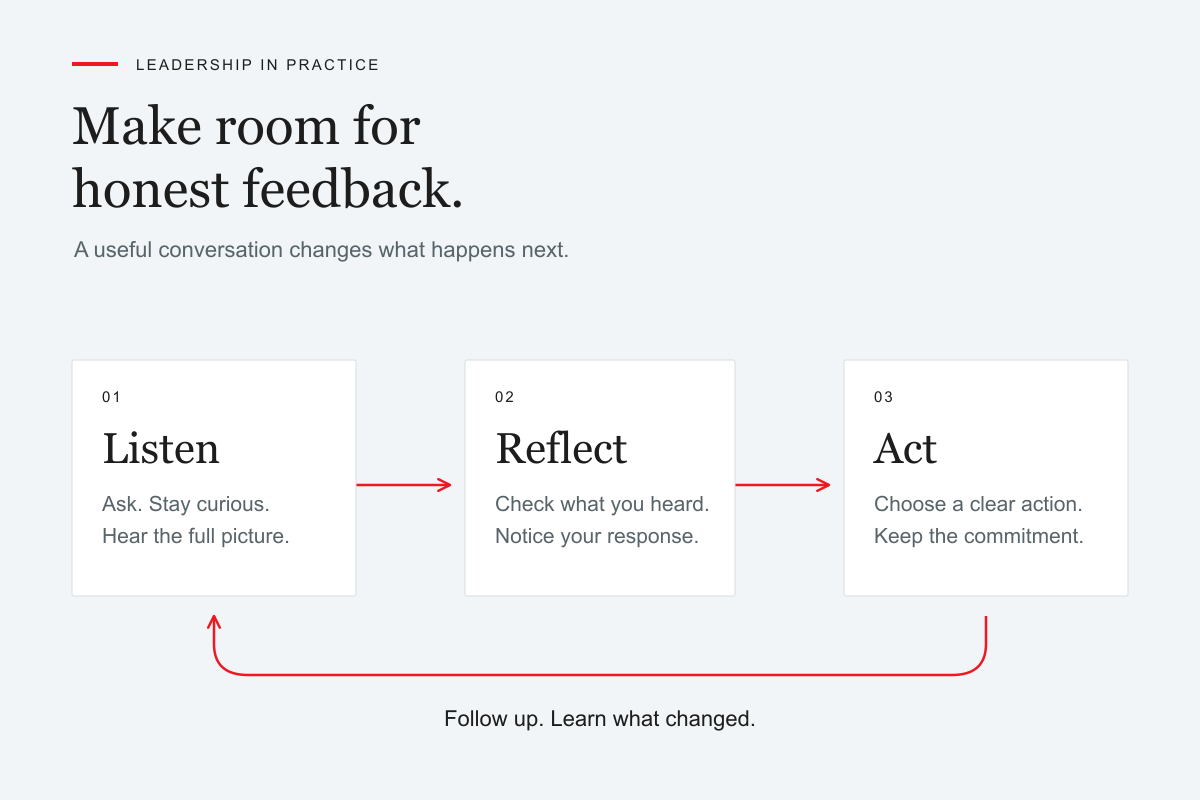
Before the conversation ends, agree on what happens next. Name the action, who will take it, and when you will return with an update. If you need time to investigate, say what you will review and set a realistic date to reconnect.
Close the loop even when the answer is no. Explain the decision and any constraints you can appropriately share. If you miss an agreed date, acknowledge it and provide a new one. Follow-through also means keeping sensitive details within appropriate boundaries. A useful update addresses the issue without unnecessarily identifying the person who raised it.
5. Invite feedback on how you handled the feedback
Once you have acted, return to the process. Ask whether you understood the concern, whether your response helped, and what would make the next conversation easier. Give the person permission to think before answering.
Use what you hear to choose one behavior to practice: fewer interruptions, clearer decisions, or more reliable updates. Avoid asking people to reassure you that you are a good leader. The purpose is to improve a working relationship. You can also offer another appropriate route for raising concerns when speaking directly with you feels difficult.
A short reflection before your next meeting
Consider the last concern someone brought you:
- What did I ask before offering my explanation?
- What did I commit to doing, and did I follow through?
- What one response could I change next time?
You do not need a perfect answer. Choose one adjustment you can make consistently, then pay attention to how the conversation develops.
Work on the conversations that matter
Explore Leadership & Growth coaching for space to reflect on your approach and prepare practical next steps. To discuss what you would like to work on, request a free 30-minute Clarity Call. Requests are reviewed before confirmation.